Concrete Driveway Installation in Dublin, OH
New Driveways, Full Replacement and Asphalt Conversion
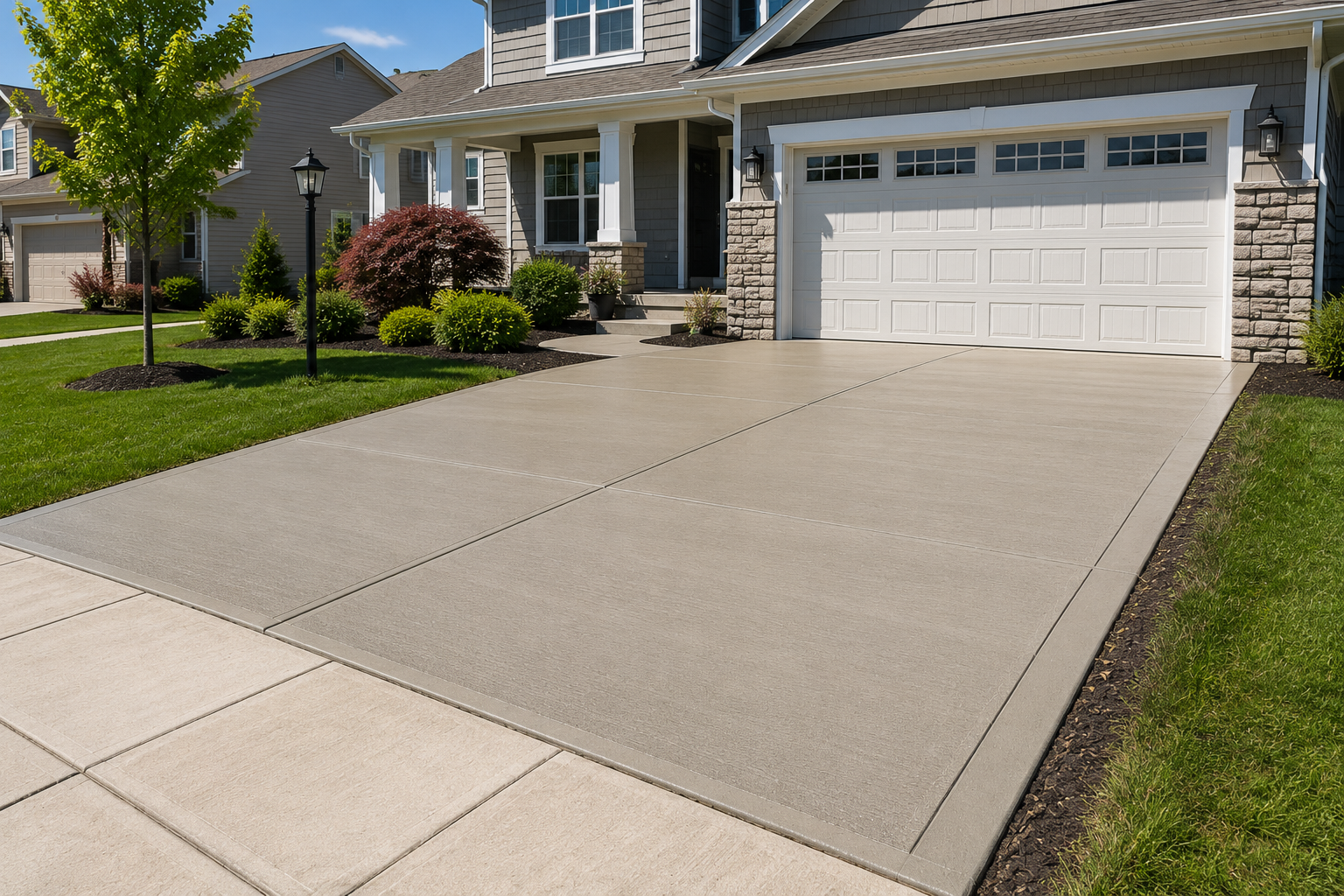
A driveway needs to support daily vehicle traffic, direct water properly, connect cleanly with the garage and street, and complement the appearance of the home. Dublin Concrete Solutions provides new concrete driveway installation, complete driveway replacement, and asphalt to concrete driveway conversion for residential properties throughout Dublin.
Each project should be planned around the existing surface, soil and base conditions, driveway slope, garage elevation, drainage, dimensions, finish, and expected use.

Contact Us
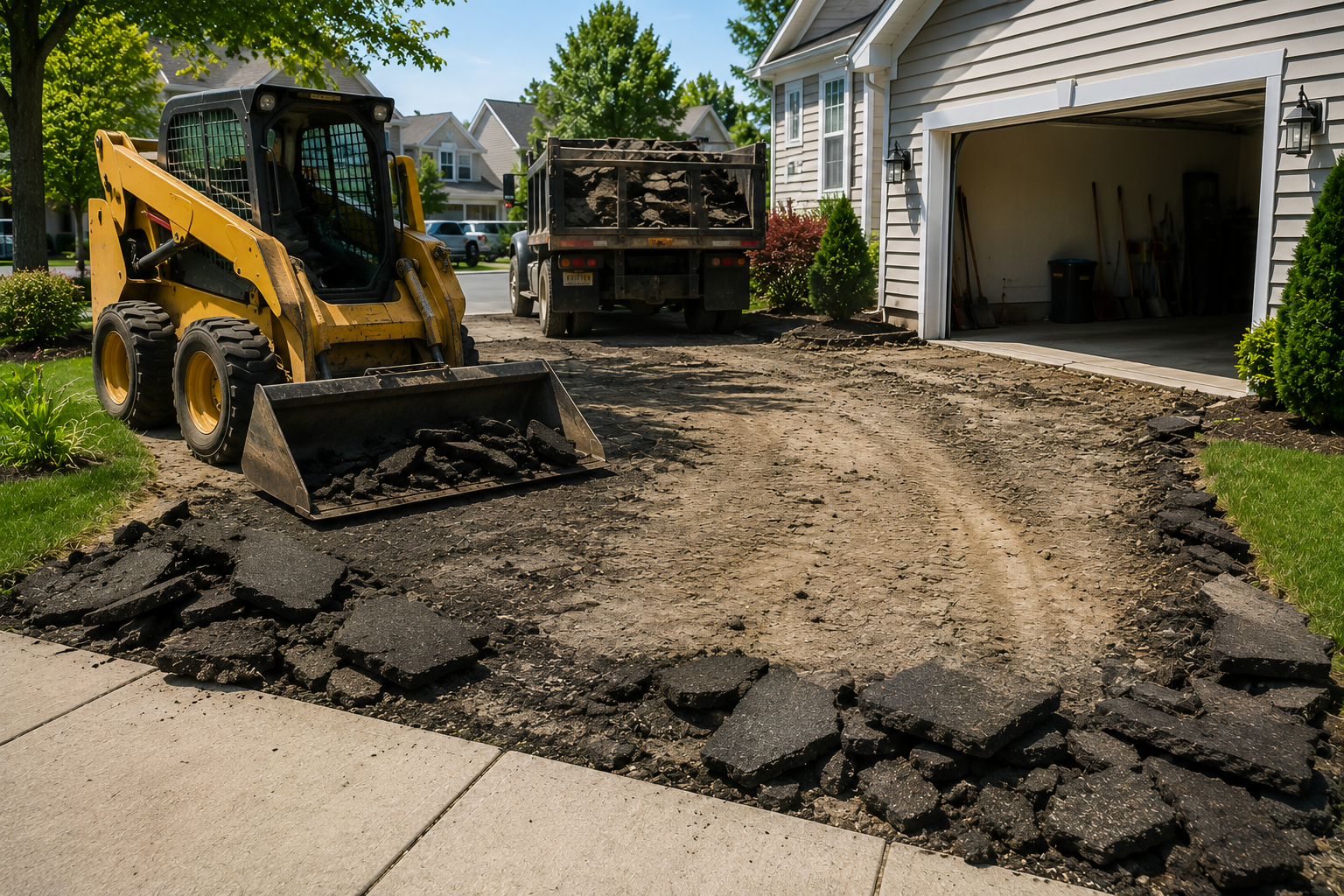
New Concrete Driveway Installation
A new driveway may be needed for a newly constructed home, garage addition, property improvement, or redesigned entrance.
Planning should begin with the driveway dimensions, vehicle use, garage location, connection to the street, nearby sidewalks, property grade, and water flow. The layout should provide practical access without directing water toward the garage, foundation, or neighboring property.
The project scope may include excavation, base preparation, grading, forming, reinforcement when specified, concrete placement, finishing, planned joints, cleanup, and curing instructions.
Concrete Driveways for Dublin Homes
A concrete driveway is a major part of the property. It provides access to the garage, supports vehicle traffic, influences drainage, and affects how the front of the home appears from the street.
The finished surface is only one part of the project. Long term performance also depends on the area underneath the concrete, including excavation, base preparation, compaction, grading, drainage, concrete selection, joint placement, finishing, and curing.
Concrete driveway projects may include new installation, complete replacement of an existing concrete driveway, or removal of an asphalt driveway before installing concrete.
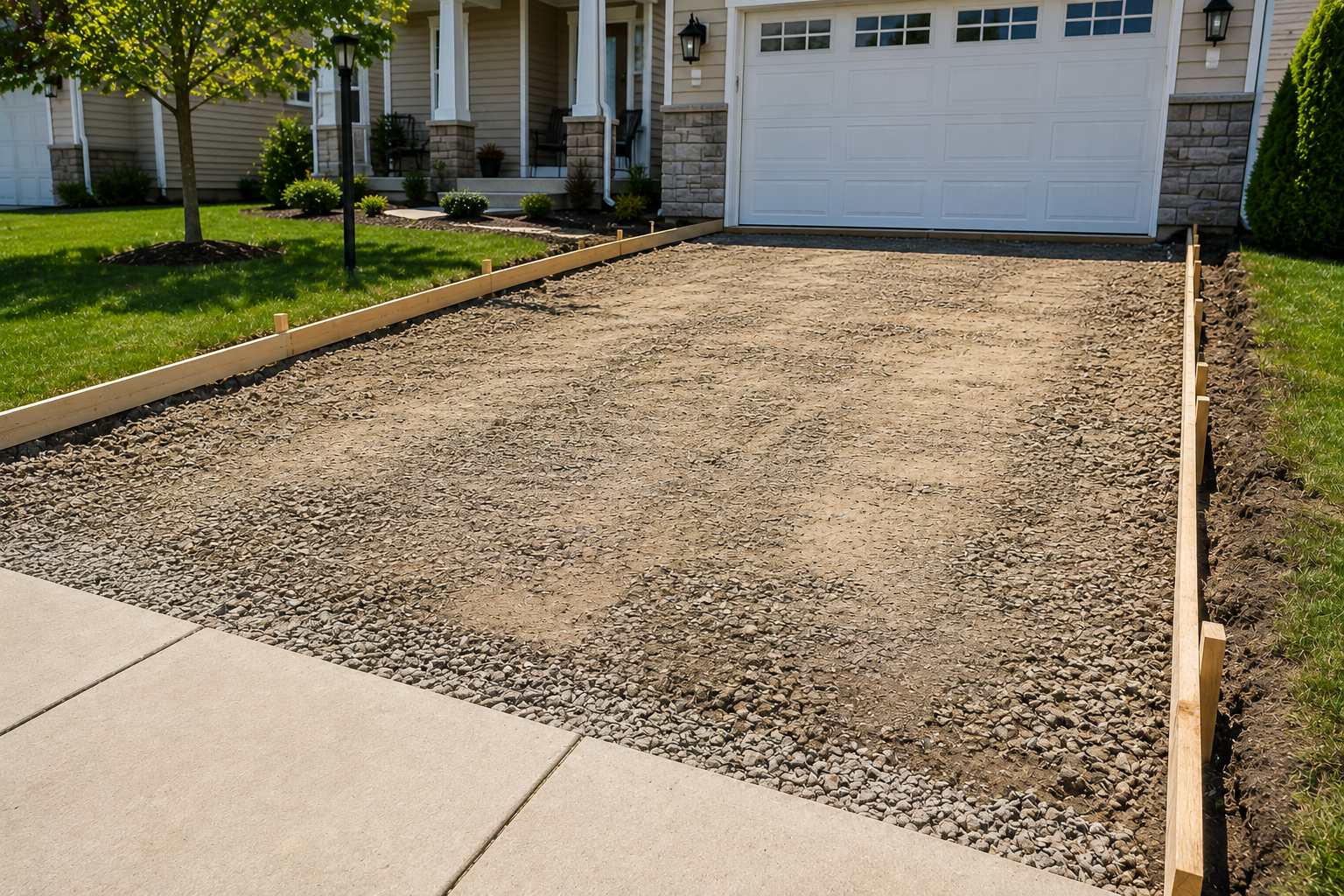
Complete Concrete Driveway Replacement
Complete replacement may be appropriate when an existing driveway has widespread deterioration, major settlement, poor drainage, an inadequate base, or a layout that no longer meets the homeowner’s needs.
The existing concrete is removed so the area underneath can be evaluated and prepared for the new driveway. Replacement also creates an opportunity to change the width, correct drainage, improve the garage transition, modify the walkway connection, or select a different surface finish.
Replace an Asphalt Driveway With Concrete
An aging asphalt driveway can be removed and replaced with concrete. This provides an opportunity to evaluate the base, grade, drainage, driveway width, garage approach, and connection to the street before installing the new surface.
Concrete does not require asphalt sealcoating. It also provides options such as a broom finish, exposed aggregate, color, decorative borders, and stamped accents.
Concrete commonly requires a higher initial investment than a basic asphalt driveway. Asphalt may be preferable when the homeowner’s main priority is lower initial cost. Concrete may be the better fit when the homeowner values lower routine maintenance, design flexibility, and a solid finished appearance.
What Happens to the Existing Asphalt?
The asphalt is broken apart, removed from the property, and taken to an appropriate disposal or recycling facility.
After removal, the underlying area should be evaluated. Existing base material should not automatically be assumed suitable for the new concrete driveway. Additional excavation, grading, base material, or compaction may be required before forms are installed.
Planning a Concrete Driveway
Driveway Size and Vehicle Use
The driveway should provide sufficient room for the vehicles that regularly use the property. Width, length, turning space, parking needs, and garage door placement should be considered before work begins.
Garage and Street Connections
The driveway must connect appropriately with the garage floor, sidewalk, curb, apron, or street entrance. Elevation differences should be identified during project planning.
Grading and Drainage
The finished surface should direct water away from the garage and home. The existing property grade, downspouts, nearby landscaping, sidewalks, and low areas may affect the drainage plan.
Base Preparation
Concrete needs a stable and uniformly prepared foundation. The existing soil and base conditions influence how much excavation, base material, and compaction may be needed.
Concrete Thickness and Reinforcement
The appropriate thickness and reinforcement depend on vehicle loads, soil conditions, project design, local requirements, and contractor specifications.
Joint Placement
Concrete naturally changes volume as it cures and responds to temperature and moisture. Planned joints help manage where movement occurs. The National Ready Mixed Concrete Association recommends planning joint locations before construction and using contraction and isolation joints where appropriate.
Concrete Driveway Finish Options
Broom Finish
A broom finish creates a lightly textured surface and is a practical choice for many residential driveways.
Exposed Aggregate
Exposed aggregate reveals selected stone at the surface and creates a more decorative textured appearance.
Colored Concrete
Color may be added to coordinate the driveway with the home, masonry, landscaping, or other concrete surfaces.
Decorative Borders
A contrasting border can define the edges of the driveway without applying a decorative finish across the entire surface.
Stamped Accents
Stamped concrete may be used for borders, entrance sections, or selected accent areas when offered by the installer.
Texture, sealer, slope, weather, and surface condition can all affect slip resistance.
Concrete Driveway Installation Process
1. Review the Project Area
The existing surface, driveway dimensions, vehicle use, garage connection, drainage, slope, access, and desired finish are reviewed.
2. Remove Existing Materials
Existing asphalt or concrete is removed when required. Excavation depth and disposal needs will depend on the project.
3. Prepare the Base
The area is graded and compacted. Base material is installed or adjusted based on the site conditions and project requirements.
4. Set the Forms
Forms establish the driveway dimensions, edges, grade, and planned surface elevation.
5. Install Reinforcement When Specified
Reinforcement may be included based on the driveway design, expected loads, soil conditions, and project specifications.
6. Place and Finish the Concrete
Concrete is placed, leveled, finished, and textured according to the selected surface design.
7. Install Planned Joints
Control and isolation joints are installed or cut in planned locations to help manage concrete movement.
8. Cure the Concrete
Curing helps newly placed concrete develop the properties for which the mixture was designed. The National Ready Mixed Concrete Association explains that curing begins after placement and finishing and requires suitable moisture and temperature conditions.
9. Open the Driveway for Use
Walking and vehicle traffic require different waiting periods. We will provide project specific instructions based on the concrete mixture, weather, curing conditions, slab design, and expected loads.
Concrete Driveways and Central Ohio Weather
Exterior concrete in Dublin must handle moisture, freezing temperatures, snow, deicing materials, summer heat, and repeated seasonal changes.
Concrete exposed to freezing, thawing, and deicing chemicals should be designed for those conditions. Industry guidance emphasizes appropriate mixture design, air entrainment, water control, placement, finishing, and curing for concrete exposed to freeze and thaw cycles.
Proper drainage is also important. Water should not be allowed to collect along the garage, driveway edges, or low areas where repeated freezing may contribute to surface problems.
Will a Concrete Driveway Crack?
Yes. All exterior concrete has the potential to crack.
Concrete shrinks as it cures and also responds to temperature, moisture, soil movement, vehicle loads, and other site conditions. Stable base preparation, appropriate concrete design, planned joints, proper placement, finishing, and curing can help reduce avoidable cracking, but they cannot guarantee that cracks will never occur.
Maintaining a Concrete Driveway
A concrete driveway generally requires straightforward care, but it should not be described as maintenance free.
Homeowners should:
Keep the surface reasonably clean
Maintain drainage around the driveway
Follow instructions before using deicing products
Clean vehicle fluids and staining materials
Avoid unsupported heavy point loads
Follow contractor and product instructions regarding sealing
Watch for water collecting near driveway edges
Concrete Driveway or Asphalt Driveway?
Concrete and asphalt each have legitimate uses.
Asphalt may provide a lower initial installation cost and can be a practical choice for homeowners prioritizing upfront price. It normally requires asphalt specific maintenance such as periodic sealcoating.
Concrete often has a higher initial cost but provides more finish and design options. It does not require asphalt sealcoating and can be coordinated with concrete sidewalks, garage floors, patios, and walkways.
Frequently Asked Questions
How much does a concrete driveway cost?
Pricing depends on the driveway dimensions, existing surface removal, disposal, site access, excavation, base preparation, grading, drainage, concrete specifications, reinforcement, finish, and site conditions. A project specific quote is required.
Can an asphalt driveway be replaced with concrete?
Yes. The existing asphalt can be removed so the base, drainage, grade, dimensions, and garage connection can be evaluated before the concrete driveway is installed.
Can an existing concrete driveway be replaced?
Yes. The existing driveway can be removed and replaced with a new concrete surface. The project may also include changes to the width, layout, slope, drainage, or finish.
Will the concrete driveway crack?
Concrete can crack. Proper base preparation, concrete selection, joint placement, finishing, and curing can help manage movement and reduce avoidable problems, but no contractor should promise a completely crack free driveway.
What finish is commonly used for driveways?
A broom finish is a common choice because it provides a clean appearance and lightly textured surface. Decorative borders, exposed aggregate, colors, and stamped accents may also be available.
Does a concrete driveway need to be sealed?
Sealing recommendations depend on the concrete surface, exposure, selected product, and installer guidance. A universal sealing schedule should not be promised for every project.
How soon can vehicles use a new driveway?
The timing depends on the concrete mixture, weather, curing conditions, driveway design, and expected vehicle load. We will provide instructions for the individual project.
Can the driveway be widened?
Driveway widening may be possible depending on the property layout, drainage, utilities, sidewalk connections, local requirements, and available space.
Plan Your New Concrete Driveway
Request a quote for a new concrete driveway, complete driveway replacement, or asphalt to concrete driveway conversion in Dublin. The project can be planned around your property, garage, drainage, vehicle use, and preferred finish.
Request a Free Driveway Quote!