Stamped concrete patios in Dublin, OH
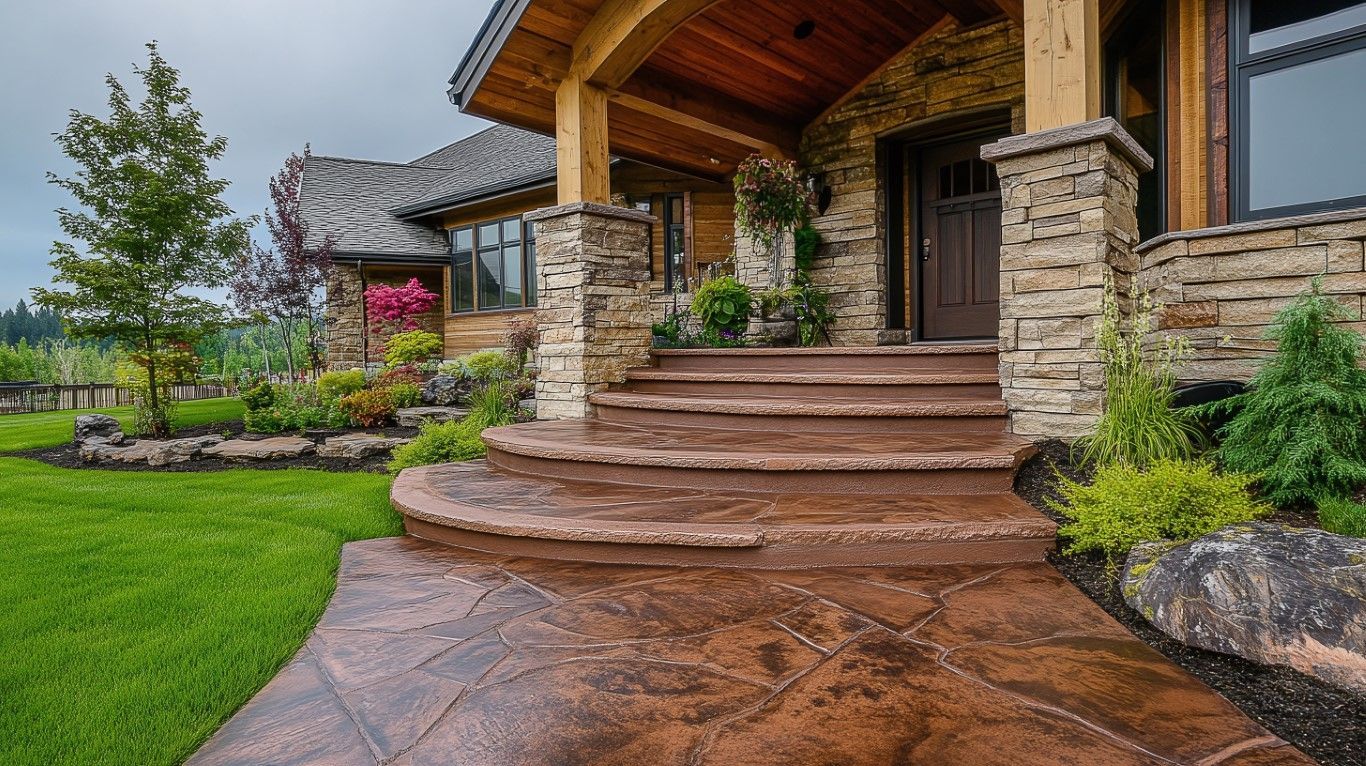
Custom Patterns, Colors and Finishes for Outdoor Living
Create an outdoor space that fits your home, landscape, and intended use. Dublin Concrete Solutions provides stamped and decorative concrete patio installation for homeowners in Dublin. Available options may include stone and slate inspired patterns, integral colors, contrasting borders, textured finishes, and traditional concrete surfaces.
Every patio should be planned around its size, layout, drainage, connection to the home, furniture placement, surrounding landscaping, and desired appearance.
Contact Us
Decorative Concrete Patios for Dublin Homes
A patio should function as an extension of the home rather than simply filling an unused part of the yard. Its dimensions, shape, location, finish, and connection to doors, walkways, landscaping, and outdoor features all affect how the space can be used.
Concrete provides flexibility in both layout and appearance. Homeowners may select a straightforward broom finished patio or use stamped patterns, color, textured finishes, and decorative borders to create a more customized design.
Stamped concrete is one form of decorative concrete. Decorative concrete can also include integral color, exposed aggregate, contrasting borders, stains, scoring, and other surface treatments.
What Is a Stamped Concrete Patio?
Stamped concrete begins as freshly placed concrete. Before the surface fully hardens, patterned mats are pressed into it to create a texture resembling materials such as slate, flagstone, brick, cobblestone, or wood planks.
Color may be incorporated into the concrete, added to the surface, or combined with release agents and accent treatments to create variation within the pattern. The exact products and coloring method should be selected based on the project design and installation process.
Stamped concrete does not reproduce natural stone or brick exactly. It creates a decorative concrete surface inspired by those materials while maintaining a continuous concrete slab.
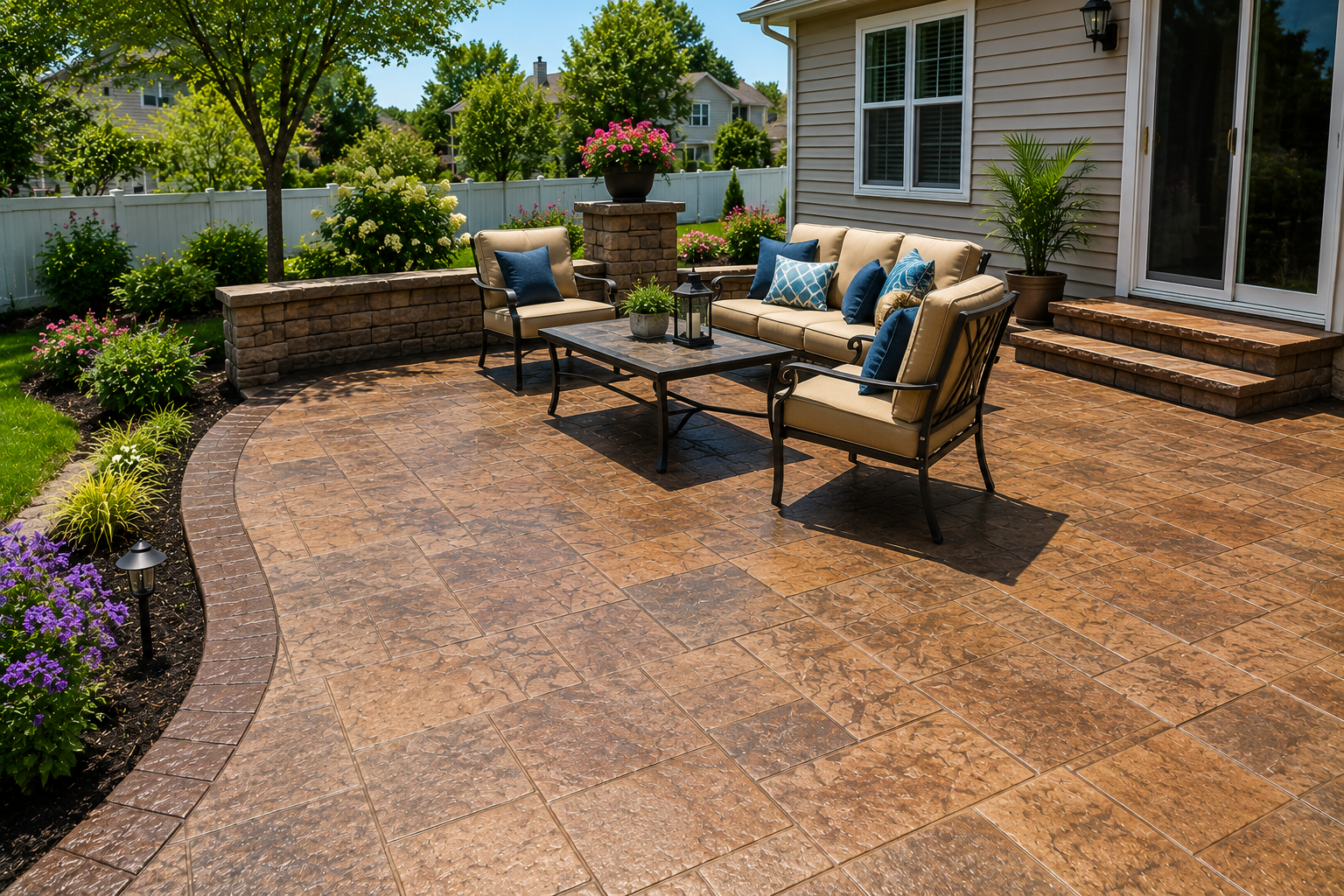
Stamped Concrete Pattern Options
Pattern selection should complement the home rather than compete with it. Large patterns may work well in open patio areas, while smaller patterns or decorative borders can help define compact spaces.
Common pattern styles may include:
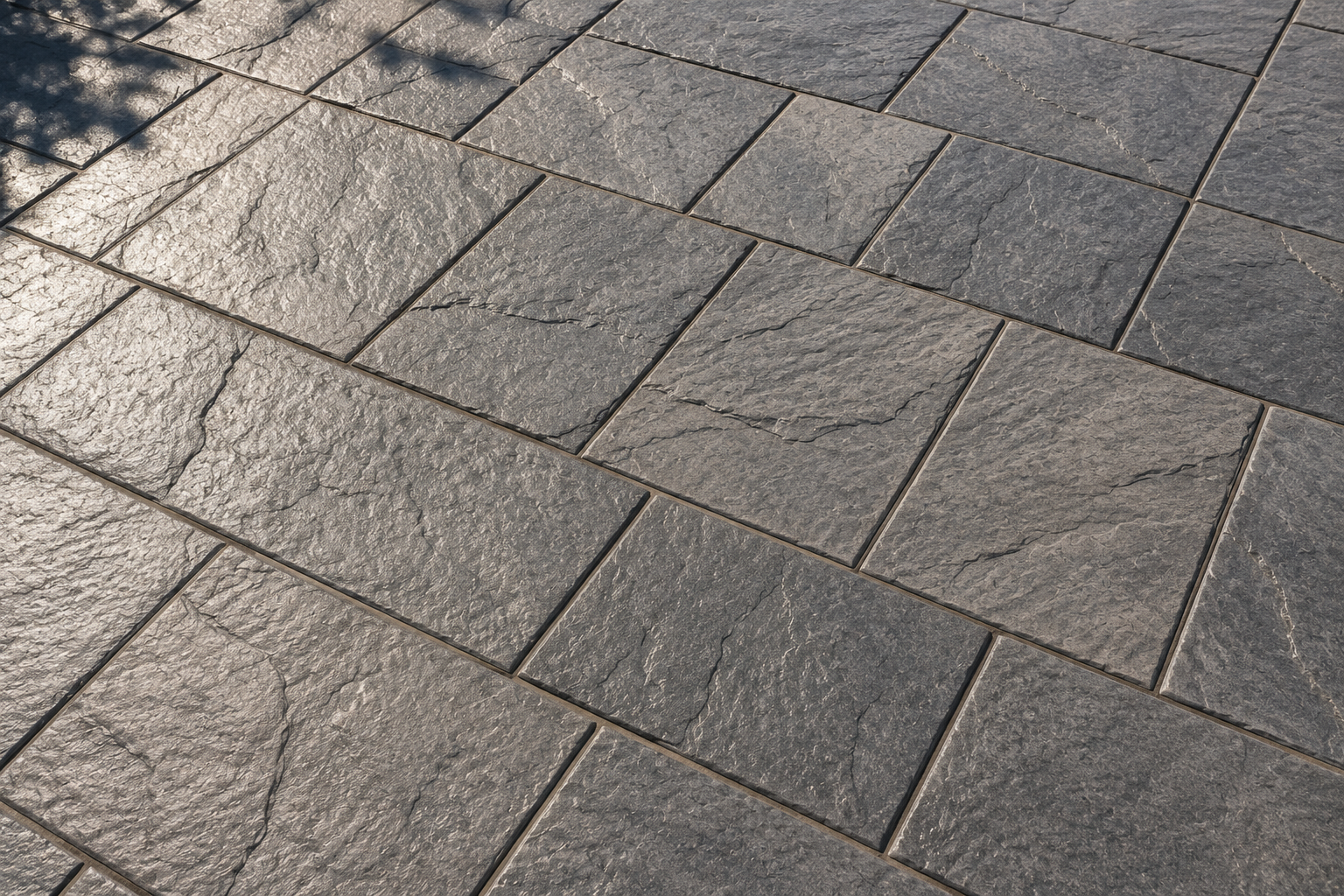
Ashlar Slate
Ashlar slate uses rectangular shapes arranged in a varied pattern. It can provide a structured stone appearance that works with both traditional and contemporary homes.
Flagstone
Flagstone patterns use irregular shapes and textures to create a more natural appearance.
Cobblestone and Brick
Brick and cobblestone inspired patterns can provide a more traditional look for patios, borders, and connecting walkways.
Wood Plank
Wood plank patterns recreate the lines and grain associated with wood while using a concrete surface.
Decorative Borders
A contrasting border can define the patio perimeter without applying an elaborate pattern across the entire surface.
Concrete Patio Color Options
Color selection affects how the patio coordinates with the home, roof, masonry, landscaping, and outdoor furniture.
Common choices include neutral grays, warm browns, charcoal tones, muted reds, and earth inspired colors. More than one tone may be used to create contrast or emphasize the stamped texture.
Colors shown in photographs or samples should be treated as general references. Concrete color can vary because of the mixture, finishing method, curing conditions, sealer, weather, and natural material differences.
Benefits of a Stamped Concrete Patio
Stamped concrete allows homeowners to customize the appearance of a patio without constructing the entire area from individual stone or brick units.
Potential benefits include:
- A wide selection of patterns and colors
- A continuous surface without individual pavers shifting apart
- The ability to coordinate patios and walkways
- Decorative borders and accent areas
- Fewer joints than many individual unit paving systems
- A surface that can be cleaned and maintained as one patio area
Planning a Functional Patio Layout
Appearance is only one part of patio planning. The finished area also needs to work with the property and the way the homeowner intends to use it.
Important planning considerations include:
Patio Size
The patio should provide enough space for furniture, grills, walkways, and expected activities without overwhelming the yard.
Access From the Home
Door locations, steps, thresholds, and walking routes should be considered before selecting the patio elevation and shape.
Drainage
The surface must direct water appropriately rather than allowing it to collect near the house or in low areas.
Furniture Placement
Dining tables, seating groups, fire features, grills, and other items require adequate clearance and circulation space.
Landscaping
Trees, planting beds, retaining features, fences, and future landscaping plans may affect the patio layout.
Connecting Walkways
A walkway can connect the patio to the driveway, side yard, pool, garden, or other outdoor area.
Stamped Concrete in Central Ohio Weather
Exterior decorative concrete in Dublin must handle moisture, freezing temperatures, snow, summer heat, and repeated seasonal temperature changes.
Performance depends on more than the surface pattern. Base preparation, drainage, concrete design, slab thickness, joint placement, finishing, curing, and maintenance all influence the finished patio.
Stamped concrete is not crack proof. Concrete can crack, and decorative patterns and colors may make future changes more difficult to match. Proper planning and control joint placement can help manage predictable movement, but they cannot guarantee that cracking will never occur.
Does Stamped Concrete Need Sealed?
A compatible sealer may be recommended for certain stamped concrete installations. Depending on the selected product, sealing may enhance color, make cleaning easier, and provide added surface protection.
However, sealing is not a one time permanent treatment. The surface condition, exposure, traffic, product used, and manufacturer’s directions influence whether and when another application may be appropriate.
The patio can become more slippery when an unsuitable sealer is used or when the surface is wet. Texture and slip resistance should be discussed when selecting finishes, particularly near pools, steps, and frequently wet areas.
New Patio Installation and Patio Replacement
Stamped and decorative concrete can be used for new patios or as part of a complete patio replacement project.
When replacing an existing patio, the project may include:
- Removing the existing concrete or other surface.
- Evaluating the area underneath it.
- Adjusting the patio layout or dimensions.
- Preparing and compacting the base.
- Establishing the required slope and drainage.
- Forming the patio.
- Placing, coloring, stamping, and finishing the concrete.
- Installing planned joints.
- Allowing the concrete to cure before regular use.
The final scope will depend on the existing conditions and the selected design.
Our Concrete Patio Process
1. Request a Quote
Provide the project address, approximate patio dimensions, existing surface information, and the type of finish being considered.
2. Review the Patio Area
The available space, access, grade, drainage, connections to the home, removal requirements, and intended use are reviewed.
3. Select the Layout and Finish
Choose the approximate patio dimensions, shape, pattern, color, border, and surface texture based on available options.
4. Prepare the Site
Existing materials are removed when required. The area is excavated, graded, compacted, and formed for the new patio.
5. Place and Finish the Concrete
Concrete is placed and finished. Decorative color and stamping treatments are applied according to the selected system.
6. Cure and Protect the Surface
The concrete must cure before furniture, grills, and regular traffic are placed on it. Project specific use and maintenance instructions should be provided.
Stamped Patio or Traditional Concrete Patio?
A traditional broom finished patio is often the more straightforward option. It provides a lightly textured surface with a clean, familiar appearance.
Stamped concrete provides more design flexibility but generally involves additional labor, materials, timing, and finishing steps. It may also require more attention to future sealing and color maintenance.
The better option depends on the homeowner’s budget, desired appearance, maintenance expectations, and how the space will be used.
Frequently Asked Questions
How much does a stamped concrete patio cost?
Cost depends on the patio size, access, excavation, removal, base preparation, concrete thickness, pattern, color, borders, site conditions, and design complexity. A project specific quote is required for accurate pricing.
Can stamped concrete look like natural stone?
Stamped concrete can create textures and patterns inspired by slate, flagstone, brick, cobblestone, and other materials. It will not be identical to natural stone, but the pattern and coloring can create a related appearance.
Can an existing patio be replaced with stamped concrete?
Yes. The existing surface can be removed so the area can be prepared for a new stamped or decorative concrete patio.
Will stamped concrete crack?
All exterior concrete has the potential to crack. Base preparation, drainage, concrete design, joint placement, curing, and installation practices can help reduce avoidable problems but cannot eliminate every possibility of cracking.
Is stamped concrete slippery?
Some combinations of texture and sealer may become slippery when wet. The intended use should be considered when selecting the stamp pattern, surface texture, and sealer.
How long before the patio can be used?
The timeline depends on the concrete mixture, weather, curing conditions, finish, and type of use. Foot traffic and placement of heavy furniture may have different timing requirements.
Can the patio match an existing walkway or pool deck?
Patterns and colors can be coordinated, but an exact match with aged concrete should not be guaranteed. Existing surfaces change in color and appearance over time.
Plan Your New Concrete Patio
Create a patio suited to your home, outdoor space, and intended use. Request a quote for a traditional, stamped, colored, or decorative concrete patio in Dublin.